Restaurant POS systems: what they do and what to compare
Disclosure: Some links in this guide are affiliate links. If you buy through them we may earn a commission, at no extra cost to you. We only link to products the guide is about. How we make money.
On this page
The short answer
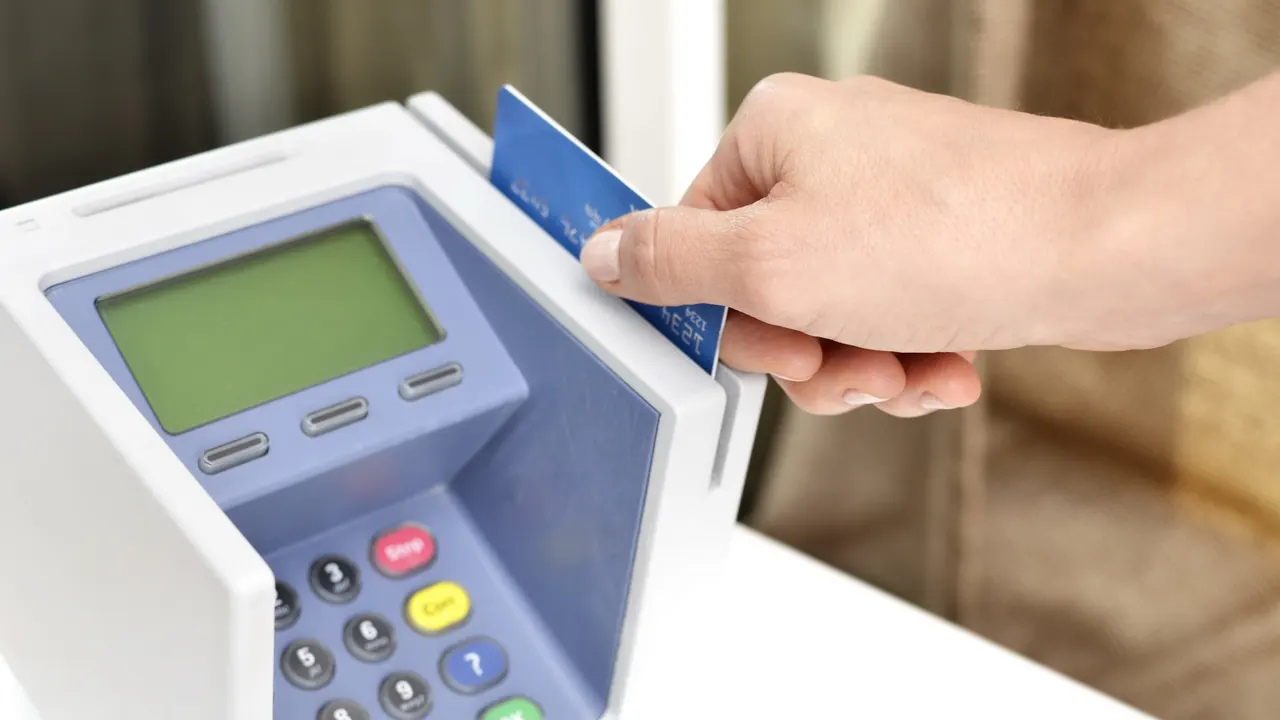
A restaurant POS system is the till for a restaurant. It takes orders, sends them to the kitchen, splits checks and takes card payments. On 20 November 2026, Toast's Point of Sale plan started at US$69 a month. Square listed US$0, US$49 and US$149 a month per location. Clover's full-service restaurant systems ran from US$179 a month for 36 months, devices included. Lightspeed Restaurant listed plans from 69 USD. Toast, Square and Clover charge card fees on top; Lightspeed's pricing page didn't list a card rate. 1 2 3 4
What a restaurant POS system does
POS stands for point of sale. It's where the order is rung up and paid for.
Wikipedia sums up the restaurant version: "Typical restaurant POS software is able to create and print guest checks, print orders to kitchens and bars for preparation, process credit cards and other payment cards, and run reports." 5
A restaurant needs more from its till than a shop does. Wikipedia lists what a restaurant looks for in the sale screen. That includes "various discounts, adding a service charge, holding of receipts", "table service as well as takeaways" and the "merging and splitting of a receipt." 5
In plain terms, that's the menu buttons, the table plan, and the split check at the end of the night. A shop cares more about barcodes and stock counts. Our page on shop checkout software covers that side.
Cloud based POS systems for restaurants
Wikipedia describes cloud systems as "most small-business POS today", in restaurants and well beyond, as our guide to POS systems for small businesses explains. With one, your menu, sales and reports live on the maker's servers, not on a computer in the back office. 5
Wikipedia puts it this way. With a cloud system, "user data, including sales and inventory, are not stored locally, but in a remote server." It adds that cloud systems "are generally subscription-based, which includes ongoing customer support." 5
There's a catch. "Cloud based POS requires an internet connection," Wikipedia notes. 5 So ask what happens when the Wi-Fi drops mid-service. Toast and Lightspeed both list "Offline mode" on their pricing pages. 1 4 Square lists offline payments too, with a condition. They "will be declined if you do not reconnect to the internet within 24 hours of taking your first offline payment." 2
One more risk is worth knowing. Wikipedia warns that "if the cloud-based vendor closes down it may result in more immediate termination of services for the end-user". 5 Ask how you'd export your menu and sales history if you ever leave.
What restaurant POS systems cost
We read these on each maker's pricing page on 20 November 2026. All are in US dollars. Restaurant plans get repriced a lot, so look again before you commit.
Toast has three restaurant plans. The Starter Kit "Starts at $0" a month. Point of Sale "Starts at $69" a month. Build Your Own is "Custom Pricing". The Starter Kit is "A hardware kit with no upfront costs in Pay-As-You-Go plans", and Toast calls it "Ideal for single-location restaurants that need just 1–2 terminals". A footnote adds: "Pricing includes first hardware terminal subscription. Additional charges apply for subsequent devices." 1
Square puts its restaurant features in every plan. Square Free was "$0/mo.", Square Plus "$49/mo." and Square Premium "$149/mo.", each "per location". Plus and Premium offered "Try free for 30 days". 2
Clover bundles hardware into each full-service restaurant system. All three include a Station Solo till with a 14" screen, a "Cash drawer" and a "Receipt printer". Starter was US$179 a month "for 36 months", or US$1,799 up front plus US$89.95 a month. Standard was US$239 a month, or US$2,548 plus US$109.90 a month. Advanced was US$354 a month, or US$4,447 plus US$129.85 a month. Clover says "Prices shown are only available on Clover.com." 3
Lightspeed Restaurant listed Starter at 69 USD, Essential at 189 USD and Premium at 399 USD. Its plan cards didn't say how often that's billed, so ask. A note under the plans reads: "Prices may vary depending on the nature of the business and the industry." 4
Card fees and hardware on top
The plan fee is only part of the bill. You'll need devices to run it on. Square and Clover also list a fee on each card sale, and Toast quotes a custom rate.
These were the in-person card rates listed on 20 November 2026:
- Square: "2.6% + 15¢" for tap, dip or swipe on Square Free, "2.5% + 15¢" on Plus and "2.4% + 15¢" on Premium. 2 - Clover: "2.3% + 10¢" for a card "tapped, swiped, or inserted" on all three full-service systems. A typed-in card number costs "3.5% + 10¢". 3 - Toast didn't print a rate. It says "We'll work with you to build a custom rate specific to the characteristics of your business." 1 - Lightspeed's restaurant table showed "Integrated payments" as "Default" on Starter and "Custom" on the other two, without a rate. 4
Big sellers can ask for a deal. Square says "If you process over $250,000 per year, talk to our team to see if you’re eligible for custom pricing and processing fees." 2
Hardware works differently with each maker. Square says its hardware has "options starting at $59." 2 Toast is stricter: its services "may only be used on approved Toast hardware." 1 That matters if you'd like to reuse tablets you already own. Wikipedia names one strength of cloud systems as "the ability to switch to a different product, by a different developer, without having to purchase new hardware". That only works when the system runs on standard devices. 5
Restaurant features to compare
Don't stop at the price. The features a restaurant needs often sit in the middle or top plan.
Tables and tabs. Clover lists "Table mapping", "Open tabs with card pre-authorization" and "Bill splitting" on all three full-service systems. "Tableside ordering and firing" is on Standard and Advanced, not Starter. 3 Lightspeed lists "Floor plans" and "Pre-auth bar mode". 4 Square lists "Coursing and seat management" under Premium. 2
The kitchen. A kitchen display system (KDS) is a screen in the kitchen that shows orders in place of paper tickets. Square charges "$30/mo. for the Square KDS app per device" on Plus. On Premium it's "$20/mo." per device. Lightspeed lists its "Kitchen Display System (KDS)" at "$30/screen per month". 2 4
Stock. Clover lists "Stock tracking and marking “sold out” by item". 3 Square lists "Integrated inventory tracking and close of day reports" under Plus. 2 On Toast, inventory sits in xtraCHEF Pro, described as "xtraCHEF Essentials, plus recipe costing and inventory management". 1
Online orders. Square Free includes a "Branded online ordering page". 2 Clover lists "No-fee online ordering" on all three systems. 3
Staff, payroll and your books
Your POS usually clocks staff in and out, and it can feed your payroll and accounting apps.
Clover lists "Shift management" on every full-service system and "Payroll integrations" as an "Optional add-on". 3 Toast offered a new-restaurant bundle at "$69/month + $9 per employee". It adds payroll and scheduling. 1 Square lists "Time tracking & attendance" and "Tips & commissions" among its restaurant features. 2 Some owners build the weekly rota in a separate app. Scheduling software made for restaurants does that job.
Tip pooling and overtime rules are set by law, not by your software. Ask your accountant or the Department of Labor which rules apply to your restaurant.
Then there's the bookkeeping. Lightspeed says "When you sync sales data to accounting software directly from your POS, you reduce human error and run a more efficient business." 4 Our explainer on cloud accounting for small businesses covers what those bookkeeping apps cost.
We haven't used any of these systems ourselves. On a trial, load part of your real menu with its modifiers. Run a split check. Send a test order to the kitchen and print the end-of-day report.
Frequently asked questions
What is the best restaurant POS system?
We can't name one. We haven't used these systems. The right fit depends on your tables and terminals, your online orders and your card sales. Compare plan fees, card rates and hardware costs for your own numbers. Try a system before you sign a contract. 1 2 3 4
How much does a POS system for restaurants cost?
On 20 November 2026, Toast's Point of Sale plan started at US$69 a month. Square listed US$0, US$49 and US$149 a month per location. Clover's full-service restaurant systems ran from US$179 to US$354 a month for 36 months, devices included. Lightspeed Restaurant listed 69, 189 and 399 USD without saying how often that's billed. Toast, Square and Clover charge card fees on top; Lightspeed's pricing page didn't list a card rate. 1 2 3 4
Is a cloud based POS system safe for a restaurant if the internet goes down?
Wikipedia notes that "Cloud based POS requires an internet connection." Toast and Lightspeed list an offline mode. Square's offline payments "will be declined if you do not reconnect to the internet within 24 hours of taking your first offline payment." Ask each maker how its offline mode works before you sign. 5 1 4 2
Sources
- Toast POS pricing, Toast. Checked 20 November 2026.
- Square for restaurants pricing, Square. Checked 20 November 2026.
- Full-service restaurant systems pricing, Clover. Checked 20 November 2026.
- Lightspeed Restaurant POS pricing, Lightspeed. Checked 20 November 2026.
- Point of sale, Wikipedia. Checked 20 November 2026.